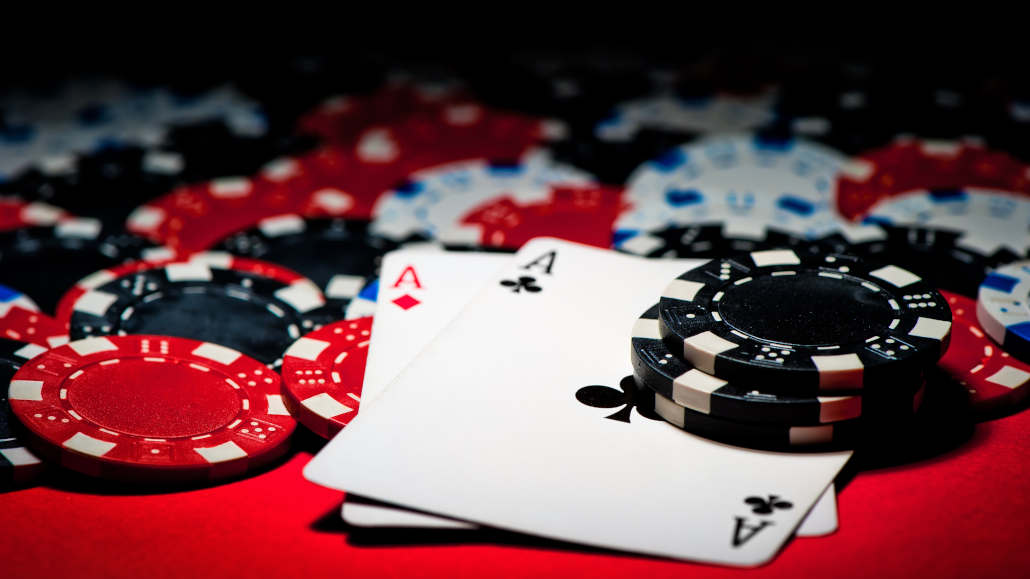
Pai Gow Poker is played with 53 cards. Seven go to each player, who then has to split them into two hands. A lot of rounds end in a push. Sessions run long. Nobody at the table plays against the others. Everyone is up against the banker.
What the game is
Pai Gow Poker turns up on plenty of lists of the best poker games online, usually because beginners find it easy to sit down to. Nobody bluffs. Nobody raises. A player looks at seven cards and decides how to set them.
The deck is a standard 52 plus a joker. At a full table, every seat gets seven cards face down. The dealer sets aside whatever is left.
The two hands
Each player sets a five-card hand and a two-card hand. The five-card one has to be the stronger of the two. Put them the wrong way round, and the hand is fouled, and the bet is lost.
Five-card hands rank as in regular poker, with one exception. In most casinos, A-2-3-4-5 counts as the second-highest straight, not the lowest. In California and Michigan, it goes back to being the lowest. The two-card hand can only be a pair or a high card.
How the joker works
In the five-card hand, the joker can complete a straight or a flush. When it can’t, it plays as an ace. In the two-card hand, it’s always an ace, though a few Southern California casinos keep it wild there. Five aces is the highest hand in the game, above a straight flush.
Winning, pushing, and losing
Once the hands are set, the dealer compares them. The player’s high hand goes against the banker’s high hand, and low goes against low. Win both, and the bet pays even money. Lose both, and the bet is gone. Win one and lose one and it’s a push, with the bet returned.
Ties go to the banker. It’s the reason the banker holds a small edge in the game.
The banker
The banker can be the casino dealer, another player, or a player co-banking with the house. A dealer banker sets hands by the house way, a fixed set of rules, so the dealer needs no strategy. A player banker can set hands freely.
Casinos earn their money in different ways. Some take a 5% commission on winnings. California casinos often charge a flat fee per hand. With proper play, the house edge runs roughly 1.5% to 2.5%. Side bets such as Fortune Pai Gow cost more, often 4% to 6% or higher.
Splitting the hand
Whether you run a business or just play on weekends, the split works the same way. There’s a fixed amount to spend and two places to spend it. Put too much into one and the other goes short.
Say the seven cards hold one pair and five unrelated cards. The pair goes in the five-card hand, and the two highest of the rest go low. Sometimes the best five-card hand leaves a poor two-card hand behind. Then the choice is whether a slightly weaker high hand buys a better low one.
Some players jot down wins, losses, and pushes for a few sessions. It shows pretty quickly which splits keep costing them.
Where it came from
Among poker origins, Pai Gow Poker is recent. Sam Torosian created it in 1985 at the Bell Card Club in Los Angeles. A customer had described a Filipino game called Pusoy to him, and Torosian trimmed the 13-card original to two hands of seven cards. By the late 1980s, it was on the Las Vegas Strip.
The game also borrows its name and spirit from a Chinese domino game. It was never patented, which helped it spread.