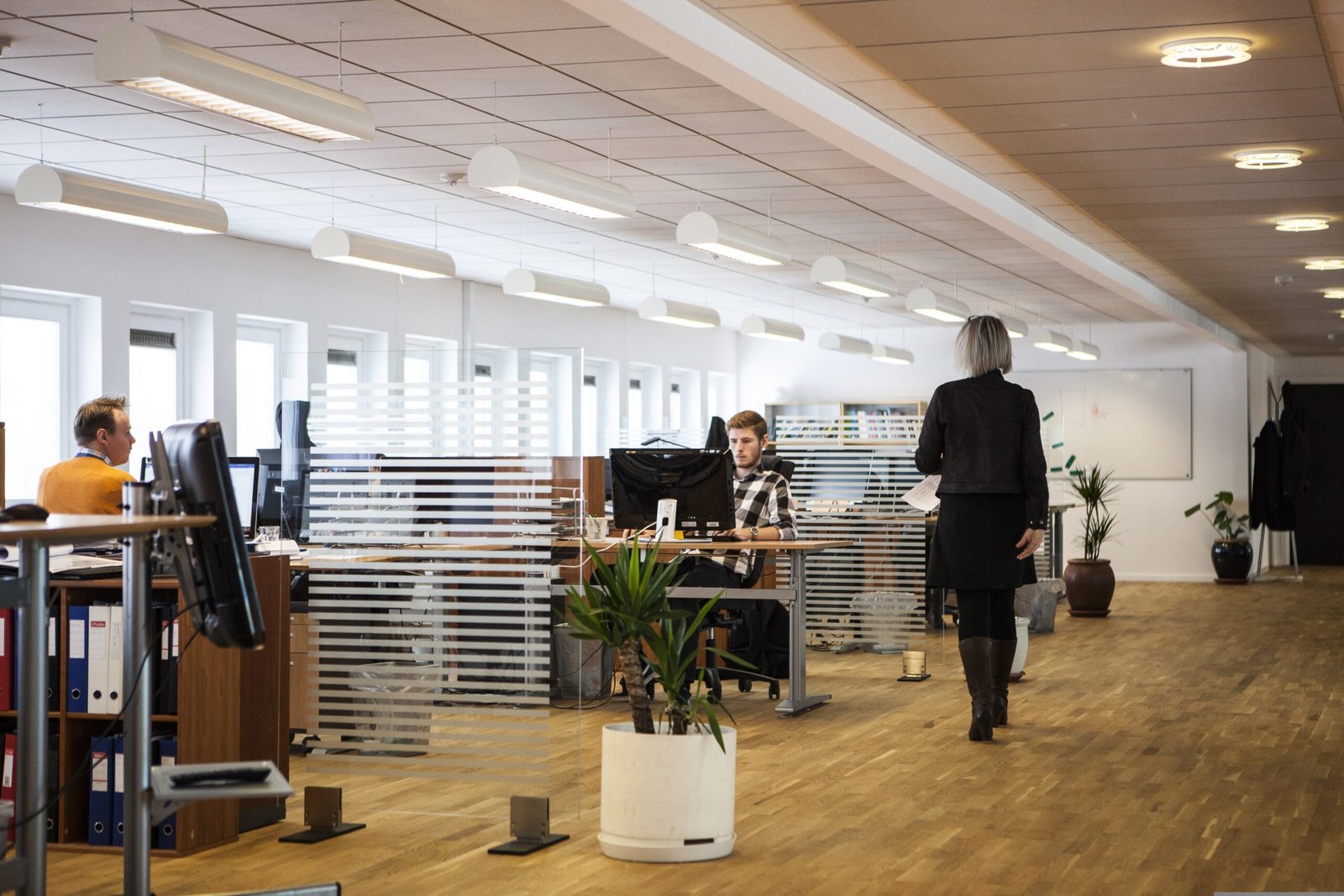
Choosing the right interior setup can make or break how an office functions day to day. More companies are now moving away from open cubicles and instead looking for the best office partitions with door systems that combine privacy, flexibility, and better aesthetics. If you’re evaluating options for your next office fit-out, here’s a practical breakdown of why this investment is worth it — and what to actually look for.
1. Real Privacy Without Sacrificing Space
Unlike full drywall construction, the best office partitions with door options use framed glass or laminate panels that create enclosed rooms without making the office feel cramped. For example:
- Single-glazed partitions work well for cabins or manager rooms where moderate privacy is enough.
- Double-glazed or acoustic partitions are better suited for HR rooms, interview cabins, or spaces where confidential conversations happen regularly.
- Frame materials matter too — aluminum frames are lightweight and rust-resistant, making them a better long-term choice over wood in humid regions.
If your office handles client calls, legal discussions, or performance reviews, don’t settle for a partition that’s purely decorative — check the glass thickness (usually 8mm-12mm for good acoustic dampening) and door seal quality before buying.
2. Sliding Doors Save Space and Reduce Wear
An Office Partition with Sliding Door is a smarter choice than a hinged door in almost any small-to-mid-sized cabin. Here’s why it matters practically, not just in theory:
- Sliding doors don’t need floor clearance to open, so you can place desks or storage units closer to the doorway.
- They reduce foot traffic noise since there’s no door swinging and banging shut repeatedly.
- Track-based sliding systems (top-hung tracks specifically) last longer than bottom-track systems because they don’t collect dust and debris that jam the rollers over time.
If you’re setting up multiple small cabins — like manager rooms along a corridor — sliding door partitions let you fit more usable rooms per square foot compared to swinging doors that eat into hallway space.
3. Mirrors Aren’t Just Decorative — They Solve Real Space Problems
Adding Custom Mirrors for Office Purpose isn’t just about aesthetics. In real office layouts, mirrors solve specific issues:
- Reception and waiting areas: A mirrored panel behind the reception desk makes a small lobby look 20-30% larger visually, which matters if your entry space is tight.
- Washrooms and grooming corners: Custom-cut mirrors sized to match cabin dimensions avoid the “off-the-shelf” look and blend into the partition framework instead of sitting as an afterthought.
- Meeting rooms with glass partitions: Frosted or switchable mirror-glass combinations let you flip a room from transparent to private mode using an electric switch — useful for boardrooms that double as quiet rooms.
When ordering custom mirrors, always specify edge-polishing and backing material (silver-backed vs. safety-backed) — safety-backed mirrors don’t shatter into sharp pieces if the glass ever cracks, which matters for office liability.
4. Noise Reduction That Actually Holds Up
Open floor plans generate an average ambient noise level of 60-65 decibels from conversations and foot traffic alone — enough to disrupt focused work. Partitions with doors, when specified correctly, cut this down significantly:
- Standard glass partitions reduce noise by roughly 25-30 decibels.
- Acoustic partitions with laminated glass and rubber door seals can push that reduction closer to 35-40 decibels, which is close to what a standard drywall room achieves.
- Door bottom seals (automatic drop-seals) matter more than people realize — a partition with excellent glass but a gap under the door will still leak sound.
If noise control is your main reason for investing, ask your vendor for the STC (Sound Transmission Class) rating of the partition system, not just the glass thickness. A higher STC rating is the actual number that tells you how well it blocks sound.
5. Lower Cost Over the Partition’s Lifetime
Partition systems are modular, which changes the cost math significantly compared to brick-and-mortar walls:
- Reconfiguration cost: Moving a partition wall when a team restructures costs a fraction of what it would to demolish and rebuild drywall — often just the labor to unbolt and relocate panels.
- Material lifespan: Aluminum-framed glass partitions typically last 12-15 years with minimal upkeep, compared to painted drywall that needs repainting and patching every few years.
- Energy savings: Glass partitions let daylight travel through internal cabins, cutting down on artificial lighting use during work hours — a small but measurable saving on electricity bills over time.
When comparing quotes, ask vendors to break down cost per square foot for framing, glass, and doors separately. This makes it much easier to compare the best office partitions with door options across suppliers instead of comparing vague lump-sum quotes.
FAQs
Q1: What’s the difference between a sliding door partition and a hinged door partition?
A sliding door partition moves along a track and needs no floor clearance to open, making it ideal for tight spaces. A hinged door partition swings open like a regular door and needs extra clearance, which can eat into hallway or cabin space.
Q2: What STC rating should I look for in an acoustic office partition?
For general privacy, an STC rating of 30-35 is sufficient. For spaces requiring serious confidentiality — like HR rooms or legal discussions — aim for STC 40 or higher.
Q3: Can custom mirrors be integrated directly into partition frames?
Yes. Mirrors can be cut to match partition panel dimensions and mounted within the same aluminum or wood frame, giving a seamless look instead of a separately hung mirror.
Q4: How long does it take to install office partitions with doors?
Most modular partition systems, including sliding door variants, can be installed within 3-10 days depending on the number of cabins and whether electrical/acoustic work is involved.
Q5: Are sliding door partitions harder to maintain than hinged doors?
Not if you choose top-hung track systems. Bottom-track sliding doors collect dust and need more frequent cleaning, so top-hung tracks are generally the better long-term choice.
Q6: Do glass partitions with doors work well in smaller offices?
Yes, especially with sliding doors, since they eliminate the need for swing clearance and help maximize usable floor space in compact cabins.